Why humility, not intelligence, is the foundation of sustainable leadership
Today is Sunday, 8 February 2026. Day 14.
It was a meaningful Sunday, not chill, not chaotic. The kind of day where work and rest blur into one another because meaning sits quietly underneath everything. For more than 10 years now, we have lived this way. Family, ministry, career, and friendship integrated rather than separated. Not balanced in neat compartments, but held together in one life.
That is the only way I know how to live sustainably. Yet, even in a meaningful life, misunderstanding still shows up. Especially with the people we love most.
Today’s reflection revolves around a tension that sounds like a small language issue, but becomes deeply practical the longer you sit with it: Understand versus understanding.
They come from the same word, but they are not the same thing. To understand often means you got it. You can explain it, defend it or even prove it. Understanding, however, is a state. A posture. A way of holding space even when things do not fully make sense to you.
The danger is this. We assume that understanding automatically produces understanding. It does not. Sometimes the more you understand, the less understanding you become.
I am not trying to play word games. I am trying to expose a leadership trap. Most conflicts, whether in marriages, families, teams, or even between nations, are not caused by stupidity. They are caused by intelligent people overestimating their ability to fully understand another human being, then acting out of that confidence.
That is why humility matters more than intelligence. To be honest, I think this is also why rest matters more than we admit. I finally slept 7 hours last night. After many days of 6 hours max, 7 felt like luxury. But it did more than refill energy. It restored patience, regulation and my ability to be understanding.
There is research showing that when sleep is disrupted, people become less socially open and less able to connect. In simple terms, lack of sleep turns us inward. It makes us more protective, more guarded, less warm. That is not a spiritual diagnosis. That is biology.
When I say understanding is overrated, I do not mean knowledge is useless. I mean this. Knowledge without humility becomes a weapon. It becomes a way to win, not a way to love.
Understanding without understanding is often the beginning of wisdom.
A Sunday of Small Exposures
The day started well. 7 hours of sleep, I woke up rested enough to notice things. We had a meal with a pastor couple who journey with us and hold our marriage accountable. People who are willing to step into uncomfortable conversations with us, not to fix us, but to walk with us.
There are moments in marriage where you must make firm decisions. To cut off anything that could slowly erode trust. To choose long term safety over short term comfort. I am grateful for pastors who do not rush these conversations.
Somewhere in the middle of calm dialogue and heated moments that eventually softened again, something light but revealing happened.
My wife laughed and called me 木头人. A wooden person.
She explained that when a woman says no, it does not necessarily mean no. I immediately struggled. I take words at face value. No means no. Yes means yes. Anything else feels dishonest.
The pastor, a man and a husband himself, smiled and said something that unsettled me even more. Do not take a woman’s no as no. No means maybe. Yes means yes.
I said honestly, I cannot understand this. He replied calmly, “you do not need to understand. You just need to accept that it is different.”
That sentence stayed with me the entire day.
Later that day, our home was filled again with people who have walked with us for more than 10 years. After the shoot wrapped, the energy felt like a party. My children thought it was a celebration. My eldest son came home halfway from my parents’ place and immediately asked to go shopping with the group. It was Sunday night. School the next day.
I said no.
He was disappointed. I could see it on his face. I recognised that feeling because I had lived it myself as a child. Wanting fun. Being told responsibility comes first.
I asked him to stay home, check his school things, and revise. Then I asked him to read a Chinese passage. He struggled badly. Barely half the words.
I knew this struggle. I lived it. Chinese was hard for me too. I did not scold him, but my tone slowly changed. Impatience crept in. Every mistake sharpened my voice.
Without verbal, I communicated something dangerous: That he was slow and failing, disappointment had now layered onto shame.
He broke down and cried.
I told him to cry. Life is tough. Be tougher.
Those words were not wrong. But they were incomplete.
While he cried, I sat there and reflected. Everything I had asked of him made sense. Staying home, preparing for school, practising Chinese.
What failed was not logic. It was understanding.
I understood his struggle cognitively. But I was not being understanding emotionally.
This is something child development researchers have been explaining for years. Learning does not happen mainly because information is correct, but because the relationship is safe. Harvard’s Center on the Developing Child uses the phrase “serve and return” to describe the back-and-forth responsiveness between a child and a caring adult. They describe it as something that shapes brain architecture itself. In simple terms, the relationship becomes the learning environment.
So in that moment with my son, the issue was not merely Chinese. The issue was the environment of relationship in that moment. My impatience turned the environment cold, even if the lesson was right.
Eventually he washed his face and came back. We continued, but differently.
I opened a video and explained to him that the brain lights up when it learns. We may not see it without scans, but it is real. I told him new learning is like growing knots, like branches forming. It expands slowly, then suddenly it becomes normal.
I told him we all learn through mistakes.
He made mistakes and I circled them. The whole passage probably 5 out of 10 words he could not read. I encouraged him. 5 can become 6, 7, … eventually to full score.
I reminded him of scripture memory. Over the years, he has memorised a lot of scripture in both Chinese and English. Just 5 minutes a day, impossible things became possible through consistent practice.
I told him I will journey with him patiently.
His face changed. Nothing changed externally. Everything changed internally.
That was the shift.
Understanding Without Understanding
Here is the paradox.
You can be understanding without understanding, and you can understand perfectly and still fail to be understanding. Wisdom does not begin with comprehension. It begins with perspective.
You do not need to be a fish to know a fish cannot breathe above water. You do not need to experience gills to respect their limits. You only need humility. The moment you insist that the fish should appreciate fresh air because it works for you, you have stopped being wise.
Leadership fails the same way.
We say treat others how you want to be treated. But that principle collapses without discernment. Because what you need is not what others need. Understanding without understanding is the ability to say, I may never fully get this, but I will not violate it.
That is wisdom.
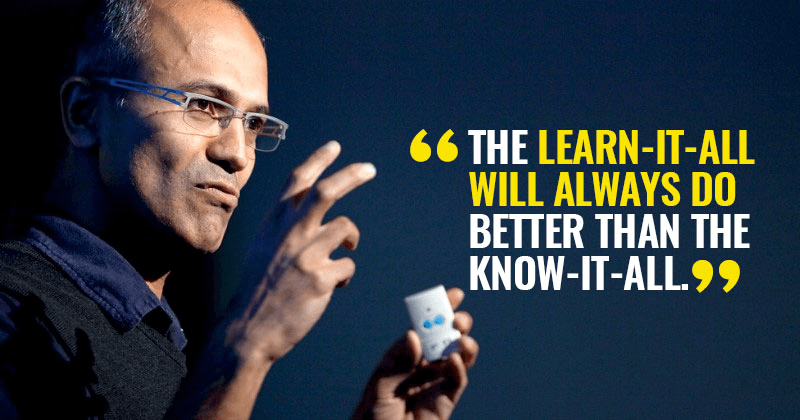
Understanding without understanding is how marriages survive, children feel safe, and teams stay engaged. I have seen this not only in family life, but in world-class organisational leadership too. When Satya Nadella took over Microsoft, one of the phrases repeatedly associated with his culture shift was moving from a “know-it-all” culture to a “learn-it-all” culture. That is not just a catchy line, but a humility posture. It is saying, we do not need to prove we are right. We need to stay teachable.
A know-it-all posture is often tied to ego. A learn-it-all posture is tied to humility, which is the doorway to understanding.
Another example I love is Toyota’s Andon system. Toyota describes Andon as a signal system where workers are permitted to stop the production line if they spot something that threatens quality. The detail that matters is not the cord or button itself. The detail that matters is the leadership posture behind it. Leaders do not demand full explanation first. They honour the signal and treat the frontline person as an expert in their own work.
It is understanding without understanding in operation.
We do not always know everything immediately. But we build a system where people can speak up without fear. That is not merely process. That is culture and humility we strive for.
When I look back at my day, I realise that the same principle applies across marriage, parenting, leadership, even nation-building.
Intelligence often escalates conflict faster than ignorance. Ignorance knows it does not know. Intelligence sometimes believes it knows enough to act. That is where wars start, not only between nations, but within families.
The opposite of leadership is not incompetence. It is self-centredness. It is needing to be right. Needing to win. Needing to control. Needing to understand on my own terms.
Humility and wisdom are soft skills, but they are not weak skills. They are the hardest to practise because it makes you feel that they slow you down.
Choosing Understanding First
Here is the practical step.
Prioritise understanding before understanding.
When conflict arises, ask one question before any explanation.
What might be true here that I cannot see yet?
That one question forces humility, interrupts ego and slows down self-preservation.
When dealing with children, remember this. They do not need correct parents. They need regulated ones. They need a safe environment for learning, not a perfect lesson. If you want a child to grow, you can fuss over the plant every day, or you can plant it in the right soil and let nature do most of the work. The soil is the relationship. The seed is the instruction. If the soil is wrong, the seed will not matter.
When leading teams, remember this. Psychological safety does not mean lowering standards. It means people can raise problems without fear. That is why Andon works. It is not permissive. It is respectful.
When loving a spouse, remember this. Acceptance often heals faster than answers. There are differences you will never fully decode. But you can still choose to honour the difference.
When your body is depleted, remember this. Sometimes you are not lacking wisdom. You are lacking sleep. Lack of sleep makes people socially withdraw and lose the warmth required for connection. Rest is not laziness. Rest is leadership maintenance.
Legacy is not built by those who understand the most. It is built by those who make it safe for others to exist as they are.
Understanding can come later, but understanding must come first.
That is the work.
That is Day 14.