The Problem We Misdiagnose
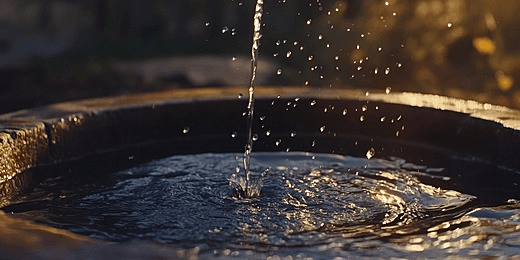
Most conflicts are not caused by the words we use in the moment. They are caused by what was or was not poured in long before the moment arrived. We argue about tone, timing, and tasks, but beneath all of it is a quieter question. Is the well full, or are we scraping the mud at the bottom?
On 9 February 2026, day 15 of my reflections, I did not set out to learn anything dramatic about leadership or marriage. It was a slow Monday. A normal day. Yet it became one of those days that quietly rearranges how you see relationships, work, and yourself.
A Day of Ordinary Encounters
It began early in the morning at school. I looked out from my office window and saw my parents’ car. That alone stopped me. I was not expecting them. I wondered if they had just finished their daily exercise. I messaged them, half curious, half distracted.
They replied simply, “Not really. Did you have time for a quick breakfast?”
Quick became 1.5 hours. A very simple and rare breakfast. These days, we hardly sit down together like that. As I watched them across the table, I felt a strange clarity. These moments are fragile. They do not announce themselves as important when they arrive. They only become precious after they pass.
I returned to work feeling grounded. Monday moved slowly. I was thankful for that. A slow Monday gives space not just to clear tasks, but to clear thoughts. I had simple discussions with my team. A light brainstorm. Nothing dramatic. Then I went home.
That evening, I bumped into my wife during a high-stress window of time. We were both rushing. She was heading out to another appointment. I was transitioning out of work mode. Normally, this is where friction forms.
We had spent the weekend intentionally building our marriage. With the help of a pastor couple who care deeply about family, we had created space to speak honestly. To say things we usually swallow and to be heard without interruption. To reassure each other that, despite disagreements and seasons of silence, we have always had each other’s best interest at heart.
So when tension showed up that evening, something different happened.
The Well That Explains Everything
It is like a well of water. At the bottom of every well, there is mud, dirt, sediment, which is normal. No relationship nor human is free from it. But when the well is full, where water has been poured in consistently, what you scoop from the top is clean.
That evening, when my wife questioned something in her natural debating way, I reacted more sharply than I intended. I expressed my feelings a bit too harshly. She paused and told me she felt hurt, then she left for her appointment.
In another season, this could have spiralled into a long night of distance. But when she returned later, we spoke normally. We had dinner together. She was visibly lighter. She laughed. We talked. Her love tank was full, so was mine. The well had plenty of water.
That is when the insight landed.
Modern neuroscience gives language to what many of us have felt but could not explain. When a relationship feels safe and full, our thinking stays clearer and steadier. We can listen, interpret, and regulate ourselves. When the well runs low, the brain begins to scan for threat. The same sentence can feel like an attack. The same tone can feel like disrespect. Nothing changed in the words. The water level changed in the nervous system.
Modern neuroscience gives language to what many of us have felt but could not explain. When a relationship feels safe and full, our thinking stays clearer and steadier. We can listen, interpret, and regulate ourselves. When the well runs low, the brain begins to scan for threat. The same sentence can feel like an attack. The same tone can feel like disrespect. Nothing changed in the words. The water level changed in the nervous system.
When the well is full, even when you scoop quickly or carelessly, you still draw water. When the well is low, even a gentle scoop pulls up mud. And when we see mud, our instinct is to criticize the well. Why are you like this? Why is there always dirt here?
But the problem is not the mud. The problem is the water level.
There is also a simple pattern that shows up in long-term marriages again and again. Researchers who studied thousands of couples over decades found that stable relationships usually have far more positive moments than negative ones. One well-known finding is a 5:1 ratio. For every difficult moment, there are many small deposits: kindness, attention, laughter, gentleness, respect. When those deposits stop, the ratio collapses. Then even a small withdrawal can feel like a major betrayal.
This applies far beyond marriage. It applies to parents, children, colleagues, teams, communities.
The best cultures understand this quietly. Some of the most creative organizations in the world learned that honest feedback only works when trust already exists. One leader in the film industry described it plainly: candor only works when trust is already there. In other words, you cannot build people by scooping at them. You build people by filling their well, and then truth becomes safe enough to be useful.
The best cultures understand this quietly. Some of the most creative organizations in the world learned that honest feedback only works when trust already exists. One leader in the film industry described it plainly: candor only works when trust is already there. In other words, you cannot build people by scooping at them. You build people by filling their well, and then truth becomes safe enough to be useful. When wells run low, people become fragile. Small comments trigger big reactions. Minor misunderstandings feel like personal attacks.
However instead of topping up the well, we keep scooping. We demand, critique and ask why others are not better, kinder, more patient. All while ignoring that the water has not been replenished.
Life is a constant exchange of giving and receiving.
Stephen Covey used a phrase that matches the well metaphor. He called it an emotional bank account. Every relationship has deposits and withdrawals. When deposits are steady, withdrawals do not destroy trust. When deposits disappear, even small withdrawals feel personal and sharp. To be healthy in relationships, we must be both excellent receivers and cheerful givers. When someone operates from a victim mentality, they struggle with this tension. They expect to receive without giving. They see relationships as one-directional.
I recognised something uncomfortable in myself that day. Not long ago, I carried traces of a victim mindset. I wanted appreciation. I wondered why my efforts were not seen. That posture quietly drains wells.
A Sauna Conversation and an Old Wound
Later that day, I went to the gym with Samuel. Just the two of us. That itself was rare. In the sauna, conversation slowed down and deepened. I asked him a simple question. What is your goal?
He answered without hesitation. To love truth. Love life. Love people. He spoke about emotional management. Not controlling emotions, but regulating them. Creating systems where emotions have an in and out.
That opened a door.
I shared something I had only recently understood about myself. For most of my life, I felt the need to do more: Be better, work harder and whip myself forward. I thought it was discipline. But through counselling, a buried memory resurfaced. When I was young, I was separated from my closest sister without explanation. She entered puberty, locked herself in her room, and my parents pulled me away. There was no closure, no conversation.
For decades, I told myself it was fine. I held no grudges and moved on. But my counsellor asked a different question: How did you feel back then?
I did not know.
She gently named it. You felt you did something wrong. You tried to become a good boy. You worked harder so you would not be abandoned again.
At first, I doubted it. But over time, patterns emerged. She had been noting my words for years. The blind spot became visible. I was easily triggered by small signals of rejection. Not because others were harsh, but because something in me was still guarding that old wound. Once I saw it, something shifted. Words that used to trigger me lost their power. My wife noticed it before I fully did. A crack in the well had been identified.
Cracks, Leaks, and Overflow
We all have cracks.
When cracks are hidden, love leaks out silently. No matter how much you receive, it never feels enough. You keep scooping, hoping for fullness, but the level never rises. When cracks are acknowledged, healing can begin. The well does not become perfect. Mud still exists. But leaks reduce. Overflow becomes possible.
This is why love must be overflowing love. You cannot pour from an empty well, and you cannot overflow from a leaking one. This is not only personal. It is practical. In workplaces, people often speak about performance, but many teams quietly bleed energy because appreciation runs too low. Studies on the workplace consistently show that when people feel valued, retention improves and productivity rises. It is not because people are soft. It is because people are human.
This is not only personal. It is practical. In workplaces, people often speak about performance, but many teams quietly bleed energy because appreciation runs too low. Studies on the workplace consistently show that when people feel valued, retention improves and productivity rises. It is not because people are soft. It is because people are human.
I told Samuel something important that day. He is a natural giver. He plans to help others grow. But I asked him a harder question. What about you?
Loving others without first caring for yourself is not noble. It is unsustainable. The wisdom is ancient. Love your neighbour as yourself, not instead of yourself.
Henri Nouwen said it in a way that stays with me: you cannot give what you do not have. If love is meant to overflow, then stewardship of the inner life is not optional. It is the source.
Leadership, at its core, is stewardship of inner capacity. When you are well, you can serve well. When you are depleted, even good intentions cause harm.
Filling Wells, Starting with Your Own
That night, as I reflected on the day, gratitude surfaced easily.
My parents. A rare breakfast.
My wife. A conflict that did not become a fracture.
My children. Discipline followed by restoration.
My colleagues and community. Steady relationships.
This is what a full well feels like.
The practical step is simple, but not easy. Stop blaming the mud. Start adding water. Continue repairing cracks.
Ask yourself where your wells are running low? Is it marriage? Family? Work? Or self?
Then ask a better question. What pours water here?
Time? Listening? Rest? Truth? Boundaries? Gratitude?
Leadership is not proven in moments of calm. It is revealed under pressure. And pressure only exposes what is already in the well. When the well is full, conflict becomes conversation. When the well is empty, conversation becomes combat.
The reversal is this. We think strong relationships eliminate mud. In reality, strong relationships simply have enough water to keep the mud where it belongs.