I missed 2 days of reflection. The 9th because I was tired; 10th because I chose to have conversation with a friend and give my attention fully, without watching the clock.
That small decision unsettled me more than I expected.
Missing 2 days of reflection made me realise how far I had swung toward rigidity. I have always believed in being purpose-driven, but something became clear this week. When purpose hardens into control, it quietly turns against you. Anything taken to an extreme eventually stops serving life, even purpose itself. It felt uncomfortable to tell myself, “Daniel, it is okay.” And that discomfort told me something important.
One of my quiet goals this year is to feel bored.
It sounds almost ridiculous when said out loud. For many people, boredom is something to escape. For me, boredom feels like alignment. Like permission. Like space where I am not producing, not proving, not extracting value from every minute.
There is research that quietly supports what my body already knows. When people are pushed into a boring task first, they often perform better on creative thinking afterwards, as if the brain starts searching inward for stimulation when the outside world goes quiet.
Maybe boredom is not the enemy. Maybe it is the reset.
A Morning Conversation I Did Not Want to Forget
On the 9th of January, I slowed down. School had not started yet. The house was quieter. I could afford to leave later. So I sat with my children and told them there are only three things to remember every morning:
Brush your teeth. Drink water. Have breakfast. After that, do whatever you want.
My second son, Eann, was awake. I asked him to lead by example for the younger ones. Lately, we have been talking about speaking in Mandarin daily. He looked at me and said something that stopped me.
“I feel dumb when I speak Chinese.”
So I told him something I have come to believe deeply. A lot of times, you need to feel dumb to grow smart. He stared at me, confused. Almost offended by the idea.
I repeated it. Slowly:
You need to feel dumb (in the short term) to grow smart (in the long term).
There is a strange mercy in mistakes. The brain is built to notice errors, and those error signals are part of how humans adapt and learn, not just academically, but behaviourally too.
I told him about the gym. About swimming, exercise, how weak I feel every time I start, how the weakness is not failure, it is the process. Weak in the short term. Strong in the long term.
Then we talked about their piano.
I reminded him how it felt at the beginning: Missing notes, losing rhythm, hands not listening to the brain. That awkward phase where everything feels wrong. And yet, over time, music appears.
There is a principle in learning science that I keep coming back to, that difficulty can be “desirable” when it forces real effort and long-term retention. The struggle feels worse, but it often teaches deeper.
I reminded him how proud I felt when he reached his goal, how Aden played his Grade 1 pieces almost perfectly. How effort compounds quietly.
Then I pointed to their youngest sister, Arielle, 7 months old.
She knows almost nothing. Drink milk. Cry. Sleep. Cry again.
Do we call her dumb? No.
We call her growing. And one day, she will learn everything they already know. Language included. Slowly and surely. So if she is not dumb while learning from zero, why are they dumb for learning from 10%?
Something shifted in his face. That was enough for me.
Speaking in Tongues, and the Kind of Quiet You Cannot Fake
There has been something else moving in the background too, something spiritual, and strangely simple.
We just did a Holy Spirit baptism, speaking in tongues.
I did not know speaking in tongues also has a baptism. I also did not expect to find anything that sounded remotely scientific around it. But I did come across a study that looked at glossolalia using brain imaging, and what struck me was this, the participants described a loss of intentional control, and the researchers observed decreased activity in brain regions associated with self-monitoring and control during glossolalia compared with singing.
There is a way to read that clinically. There is also a way to recognise something human in it.
Sometimes the most restorative thing is not effort, not explanation, not trying to sound correct. It is surrender. It is letting the need to manage everything loosen its grip.
Even if someone does not share my theology, I think most people understand this kind of moment. The body knows when it is finally not performing.
Discipline, Boundaries, and the Word We Avoid
This season has forced me to revisit a word many people are uncomfortable with: Caning.
Not violence. Not anger. Discipline.
Discipline is a tool. Like a surgeon’s knife. Used with care, it heals. Used recklessly, it destroys.
My youngest son has been testing boundaries. Running while eating. Hitting when angry. Standing at the edge of the road just to see my reaction.
There were no consequences. And I realised something uncomfortable. Love without boundaries is not kindness. It is negligence. After speaking with a senior couple I respect deeply, people whose children have grown into calm, grounded adults, I made a decision. Clear boundaries are an act of love.
Their son carries no scars. Only gratitude.
That matters.
In psychology, there is a long-standing distinction between harshness and firmness. An authoritative style, warmth paired with clear limits and consistent follow-through, is repeatedly linked with better outcomes for children across cultures, including psychosocial competence and academic outcomes.
The goal, at least in my heart, is never fear. The goal is guardrails. The goal is safety. The goal is a child who can live well among others, who can hear instruction, who can stop when it matters, who will not need the world to teach them consequences in a way that is permanent.
I cannot imagine the regret of watching my child run into danger because I chose peace over responsibility. And maybe this is the part people misunderstand. The discomfort is not proof something is wrong. Sometimes it is proof something is finally being taken seriously.
The Dog That Taught Me About Parenting
Years ago, my younger sister was rebellious. I noticed something she loved. Pets.
I spent my own money to buy her a dog, hoping it would ground her.
It worked. And it created another problem.
My parents could not tolerate mess. So I took the dog to Kuala Lumpur and trained it from scratch. Where to eat. Where to sleep. Where to relieve itself. How to respond to commands.
Three months later, the dog was different.
People smiled instead of fearing it. They welcomed it instead of avoiding it.
That is when it clicked.
Training is not cruelty. It is preparation for acceptance.
The same principle applies to children too. Not because children are animals, but because behaviour in any social world needs boundaries if it is going to be safe, liveable, and welcomed.
Without conditioning, freedom becomes chaos. With structure, freedom becomes safe.
Leadership Always Starts at Home
The older I get, the more I see it.
Leadership does not begin in boardrooms. It begins at the dining table. In marriage. In parenting. In the quiet moments when no one is watching.
I realised this late. That is okay. Today is always the best day to begin again.
We cannot rewind time. We can only steward what is in front of us now.
So I am learning to hold purpose gently. To allow boredom. To accept discomfort. To feel dumb long enough to grow wise.
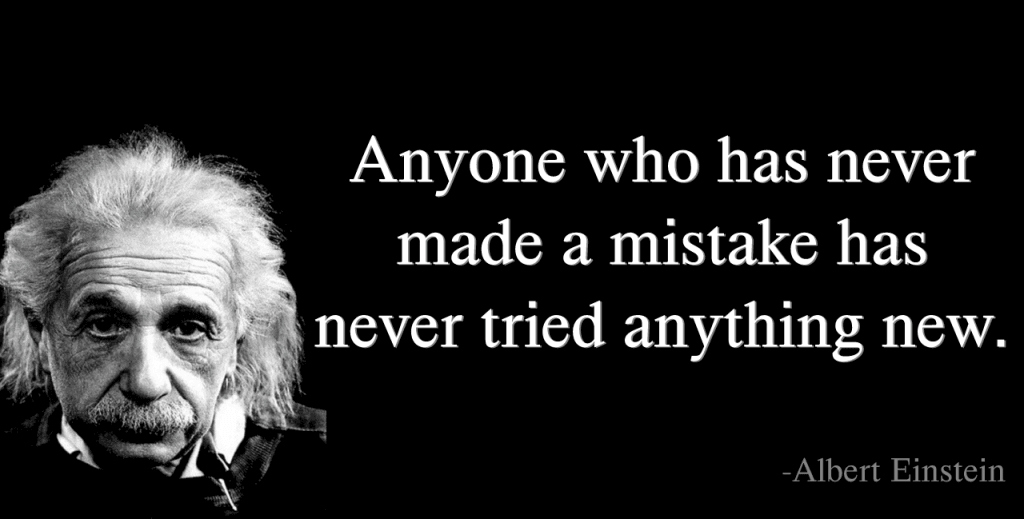
“Anyone who has never made a mistake has never tried anything new,” Einstein once said, and I do not even need the quote to believe it anymore. I see it in the gym. I see it in piano. I see it in language. I see it in parenting.
And I am starting to see it in myself too.
Sometimes the most disciplined thing is not pushing harder.
Sometimes it is loosening your grip, long enough to heal, long enough to listen, long enough to become flexible again.